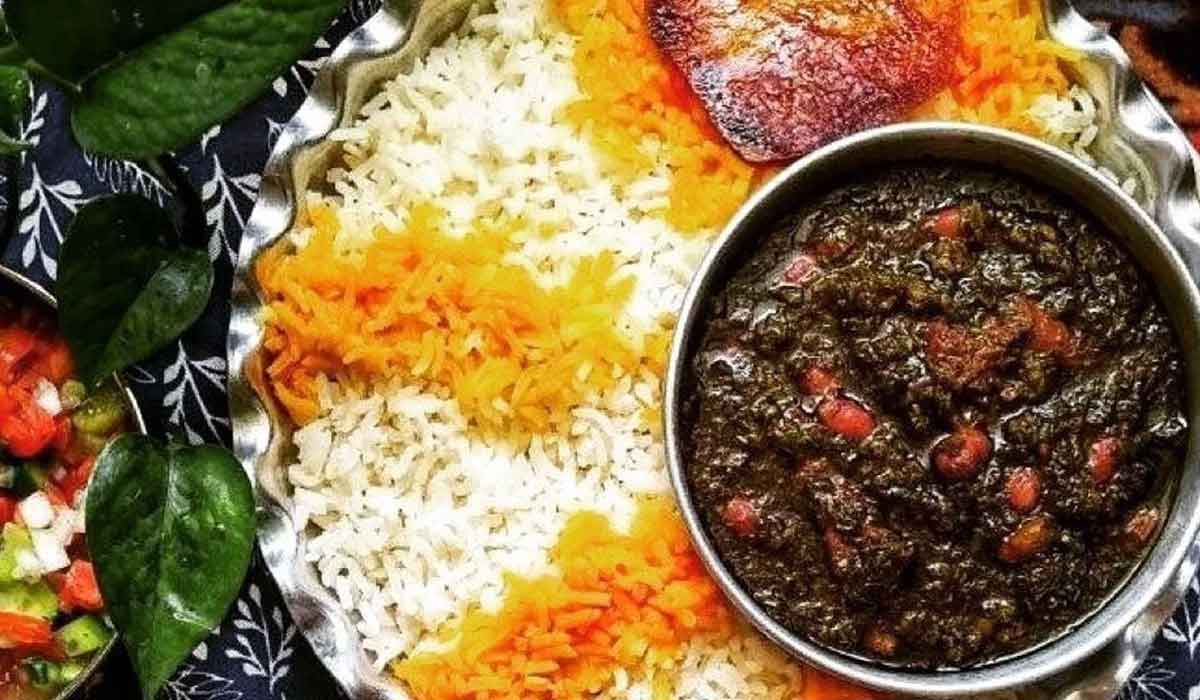
If you ask ten Iranians how to make Ghormeh Sabzi, you''ll get eleven recipes and at least one small argument. That''s fine. This is the version we cook at the cafe — and the one I grew up eating on Friday afternoons when the whole house smelled like fried parsley and dried lime, and you knew lunch was going to take a while.
Ghormeh Sabzi (قورمه سبزی) is the one a lot of us call the national dish. Not the prettiest stew on the table — it''s deep, dark green, almost black by the time it''s done — but it is the one most people miss the most when they move away. Tender chunks of beef or lamb, red kidney beans, a small mountain of herbs, and the smoky-sour bite of limoo amani (dried Persian limes). Served over rice with proper tahdig, ideally with a wedge of lemon next to the plate.
A few honest things before we start:
- Don''t rush it. Three hours on low is the recipe. Two hours and high heat will give you a sad, grey stew with tough meat. I''m saying this with love.
- Fry your herbs properly. This is the part most people get wrong. The herbs need to go almost dark in the pan, not just wilted. That''s where the flavour lives.
- The dried limes are not optional. Fresh lime juice is a different thing. If you can''t find limoo amani, ask any Middle Eastern grocer — every one of them carries them.
What you''ll need
For 6 people, with leftovers (and you do want leftovers — it''s better the next day).
For the stew
- 1 large yellow onion, chopped fine
- 6 tbsp neutral oil — sunflower or olive, your choice
- 4–5 garlic cloves, minced (I do 5; my mother would do 7)
- 1½ lb beef stew meat (chuck), cut into roughly 1½-inch cubes — lamb shoulder also works beautifully if you can get it
- 1 tsp ground turmeric
- 1 tsp black pepper
- 1 tsp kosher salt, plus more later
- 1 bouillon cube (chicken or beef — optional, but I always use one)
- 4 cups water
- 5 dried Persian limes (limoo amani)
- 1 can (14 oz) red kidney beans, rinsed and drained
- 1 tbsp fresh lemon juice, added at the very end
For the herbs (the soul of the stew)
- 1½ big bunches of parsley
- 1 bunch cilantro
- 2 bunches green onions (the whole thing, not just the green part)
- 12 oz baby spinach
- 2 tbsp dried fenugreek leaves (shanbalileh) — please don''t skip this. A tablespoon too much and the stew goes bitter, a teaspoon too little and it tastes like a generic green stew. Two tablespoons is the sweet spot.
How we cook it
1. Brown the meat properly
Heat 3 tbsp of oil in a heavy pot or Dutch oven over medium. Add the onions and cook them slow until they''re a real golden brown — not pale, not burnt. Patience here pays off. Add the garlic, turmeric and black pepper, stir for 30 seconds until the kitchen smells the way it should.
Now drop in the meat and let it sear. Don''t stir it every five seconds. Let it sit, get colour, then turn. Season with salt and the bouillon cube, pour in the 4 cups of water, bring it to a boil, then drop the heat to a quiet simmer. Leave it uncovered for one hour. Walk away. Drink tea.
2. Fry the herbs — the part that matters
While the meat simmers, wash the herbs well. Persian cooking lives or dies on clean herbs. Spin them dry, then chop everything fine. Yes, it takes a while. Put on music.
In a big wide pan, heat the remaining 3 tbsp of oil over medium-high. Add the parsley, cilantro and green onions first, and fry them. Keep stirring. They''ll start bright green, then go dark, then start smelling almost smoky — that''s what you want. This takes 10–15 minutes. Add the spinach in the last few minutes (it cooks down fast), and the dried fenugreek in the final two minutes only. If you add fenugreek too early it gets bitter.
When the herbs look dark green and the oil has separated a little, they''re done. If your kitchen doesn''t smell like a Tehran teahouse at this point, you didn''t fry them long enough.
3. Bring everything together
After the meat has simmered its first hour, take a fork and stab each dried lime a few times — this is so they release their flavour without floating around looking smug. Drop them in. Cover the pot but leave the lid cracked. Simmer another hour.
Now tip in the fried herbs and the drained kidney beans. Stir. If it looks tight, add half a cup of water. Cover (cracked lid again) and simmer one more hour on low. Three hours total. There''s no faster version of this stew that tastes the same. I''ve tried.
4. Finish it
Fish out the dried limes — set them on the side of the serving dish for anyone who likes to squeeze them onto their rice (I do). Taste the stew: it should be deeply savoury, slightly sour, a little salty. Add the lemon juice, taste again, adjust salt. If it''s pale or watery, simmer uncovered another 15 minutes to thicken.
Serve over fluffy basmati rice with a piece of tahdig if you''ve got one going, and a small bowl of Shirazi salad on the side. Cold yogurt is also welcome. Eat slowly.
Things that go wrong — and how to fix them
- Bitter stew? Almost always the limes — they were left in for too long. Pull them out after 2 hours next time.
- Tough meat? It needed more time, not more heat. Put the lid back on and give it another 30–45 minutes on low.
- Pale-coloured stew? Your herbs weren''t fried long enough. The dark colour comes from properly cooked parsley, not from spices.
- Too sour? A pinch of sugar at the end balances it. Don''t tell anyone you did this.
Make-ahead notes
Wash and chop the herbs the night before, store them in an airtight container in the fridge. It cuts the prep time roughly in half. The stew itself is also one of those dishes that''s genuinely better the next day — the flavours settle and deepen overnight. Make a big pot on Saturday and you''ve got Sunday lunch sorted.
If chopping herbs for two hours doesn''t sound like your Friday plan — we make Ghormeh Sabzi at the cafe almost every week. Come eat it with us, or order it for pickup. Either way, you don''t have to clean the parsley.